
Why Minimalism
Less is more. It's not just a design principle — it's a way of thinking. A way of seeing.
Minimalism has always been part of how I move through life. When there's too much of anything, it's easy to feel overwhelmed. The same is true in a photograph. Too much competing for attention and the eye doesn't know where to land. The subject gets lost in the noise.
I learned this early, working alongside renowned dog photographer Amanda Jones in San Francisco in 2000 as her assistant. Her approach was quiet and intentional — and it shaped the way I see to this day.
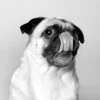
In the studio, minimalism means one thing: the dog. Not the backdrop, not the props, not the setting. Just the dog. With a minimalist approach, I give my subjects breathing space — room to simply exist in the frame without distraction.
I do use props and accessories from time to time — a flower or a simple accessory for a pop of color. And when a client has something meaningful they'd like to include, I honor that. The session is ultimately about their dog and what feels true to them.
At the heart of every portrait I make is the same quiet intent: capturing the beauty that is dog, and making a connection with my subject.
Strip everything away, and what's left is everything that matters.
— Ann Burgermyer, Dogs on Paper